
Loading...
Serving Camarillo, CA and surrounding areas. (805) 586-6058
Camarillo Deck & Fence is a deck builder serving Thousand Oaks, CA, specializing in custom deck design and build, composite deck installation, and covered patio structures. We know the Conejo Valley's hillside lot conditions, fire hazard severity zone requirements, and the permit process at the City of Thousand Oaks Community Development Department, and we bring that local knowledge to every project.
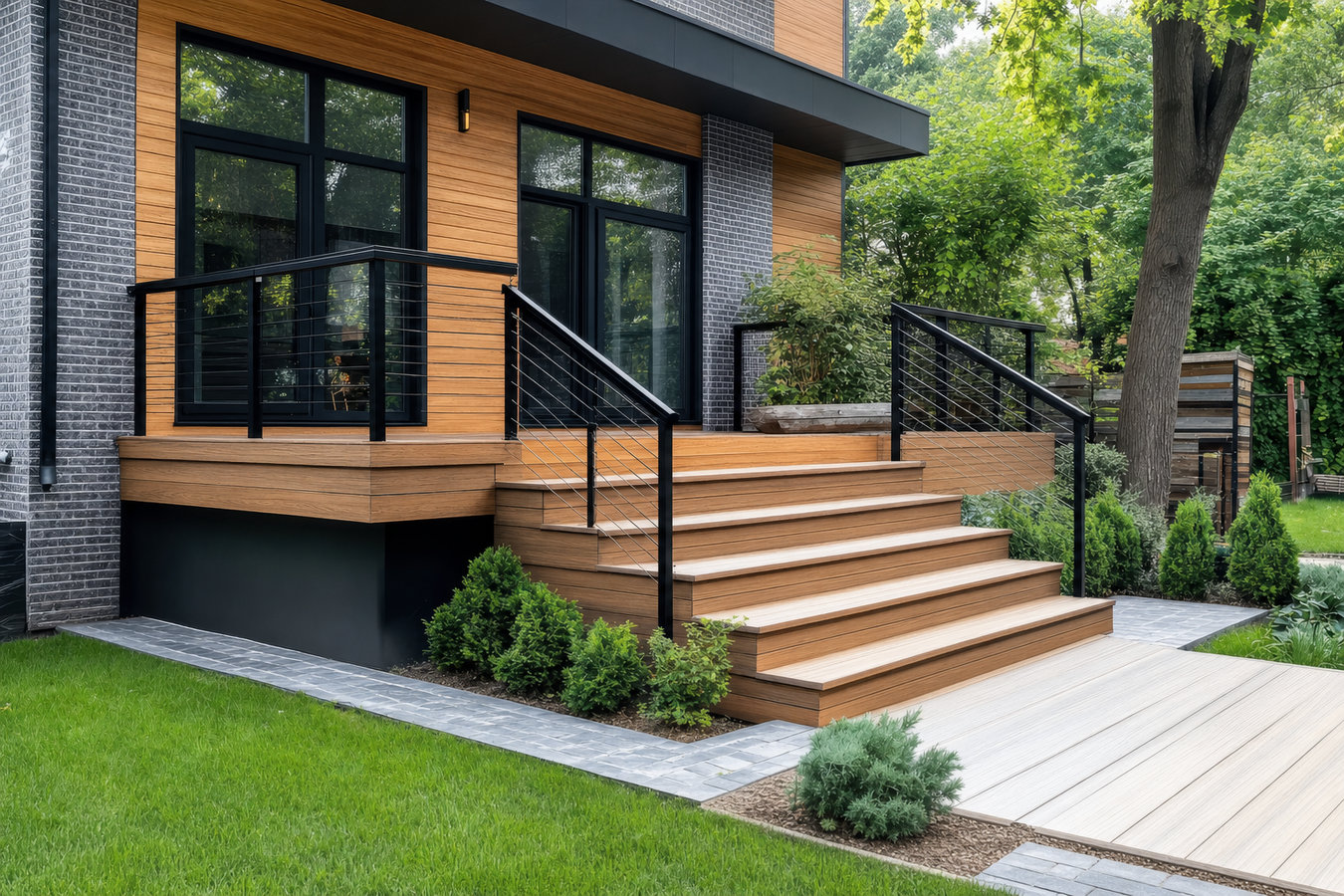
Thousand Oaks has a wide range of lot types, from flat ranch-home yards in the Newbury Park corridor to steep canyon-adjacent parcels in Lynn Ranch, and each one requires a design drawn from the actual site rather than a standard template. We account for fire hazard zone requirements, soil conditions, and your home's existing framing at the design stage so nothing comes as a surprise during the build. See the full details of our custom deck design and build process.
Thousand Oaks summers are long and dry, with temperatures regularly reaching the mid-90s, and that heat combined with intense UV exposure breaks down unprotected wood decking faster than homeowners expect. Composite decking maintains its appearance in that climate with minimal upkeep, and modern composite products with solid fascia boards help satisfy the ignition-resistant construction requirements that apply in the city's fire hazard zones.
The intense afternoon sun in the Conejo Valley makes an uncovered south- or west-facing deck difficult to use for much of the day from May through September. A solid-roof patio cover or lattice structure extends usable outdoor hours significantly and protects deck finishes and outdoor furniture from direct UV damage year-round.
Larger lots in neighborhoods like Lang Ranch and Conejo Oaks often have the yard space for a freestanding pergola that creates a defined outdoor dining or lounge area separate from the main deck. Pergolas pair well with Thousand Oaks yards that back up to open space, creating a transition between the landscaped yard and the natural hillside beyond.
Hillside homes in Thousand Oaks often have elevated decks where the railing height requirement steps up to 42 inches under California building code, and the structural posts anchoring those railings need to be correctly sized for the live loads that occur when people lean against them. We size and anchor railings to code, not just to the minimum that looks acceptable from the street.
Many planned communities in Thousand Oaks specify vinyl fencing as the approved boundary material, and the hot, dry summers in the Conejo Valley make vinyl a practical choice regardless of HOA requirements because it does not warp, split, or need repainting the way wood does under prolonged heat and low humidity.
Thousand Oaks was largely developed as a planned community between the 1960s and 1990s, and most homes are now 30 to 60 years old. Original wood decks from that era are well past their expected lifespan, and the clay-heavy soils common throughout Ventura County cause footings that were not properly engineered to shift with the wet-dry seasonal cycle. A contractor who calculates footing size the same way they would on a flat inland lot will build a deck that starts to move within a few wet seasons on a Conejo Valley hillside.
Wildfire is a serious and ongoing concern in Thousand Oaks. The Woolsey Fire in November 2018 burned through parts of the city and the surrounding area, and a large share of Thousand Oaks properties fall within a High or Very High Fire Hazard Severity Zone as designated by Cal Fire. That designation affects what materials can be used under and around a deck, and the Santa Ana wind events that push through the Conejo Valley each fall reinforce why these structural requirements exist. A contractor who does not know the local fire hazard map cannot make compliant material recommendations.
Our crew works throughout Thousand Oaks regularly, and we understand the local conditions that affect deck builder work here. We pull permits from the City of Thousand Oaks Community Development Department and know what the plan checkers expect on hillside lots, fire hazard zone projects, and the stucco-clad ranch and Spanish-style homes that make up most of the city's housing stock.
The neighborhoods here have distinct site conditions. Lynn Ranch and the canyon-adjacent streets have steeper grades, larger lots, and expansive soils that require deeper footings and more careful drainage planning. The flatter neighborhoods near Thousand Oaks Boulevard and the areas close to the Amgen campus have more standard lot conditions but still sit in the Conejo Valley's Mediterranean climate with its long dry summers and concentrated winter rain. Lang Ranch and newer master-planned communities to the east tend to have more uniform lots and HOA design standards that need to be factored into the plan submission.
We also serve homeowners in surrounding communities. If you are in Newbury Park, which shares the Conejo Valley with Thousand Oaks, or out toward Moorpark, we cover those areas as well.
Reach out by phone or through our contact form and we will get back to you within 1 business day. We ask about your lot type, any existing structure, and whether your property is in a fire hazard zone so we prepare the right questions for the site visit.
We visit your property, measure the site, check soil and slope conditions, and verify your fire hazard zone status before preparing a written estimate. The estimate covers materials, labor, the permit fee, and any HOA submission costs so there are no surprises mid-project.
We submit the permit application to the City of Thousand Oaks on your behalf and begin construction as soon as approval comes through. Most builds in Thousand Oaks take one to two weeks on-site, and you do not need to be home during construction.
The city inspector reviews the completed work, and we walk through the finished project with you before we leave. You receive the final inspection certificate, which documents that the deck was built to code and is the paperwork your insurance carrier and future buyers will ask for.
We serve homeowners throughout Thousand Oaks and the Conejo Valley. Get a written estimate with no obligation.
(805) 586-6058Thousand Oaks is a planned city of roughly 126,000 people in the Conejo Valley in southeastern Ventura County. The city was developed primarily between the 1960s and 1990s as a suburban community designed around open space preservation, and today it is bordered by the Santa Monica Mountains National Recreation Area to the south and large undeveloped hillsides on multiple sides. The housing stock is dominated by single-family homes in a range of styles, from single-story ranch homes that typify the earliest phases of development to two-story Spanish-style and traditional homes built in the 1980s and 1990s in communities like Lang Ranch. Most homes have stucco exteriors and concrete tile roofs, which is the standard for the climate and era.
The city is one of the more stable and affluent communities in the region, anchored by major employers like Amgen and a high rate of owner-occupied housing. Neighborhoods like Lynn Ranch, Conejo Oaks, and Newbury Park each have distinct characters, and properties backing up to canyons or open space are common throughout. Thousand Oaks is well connected to neighboring Camarillo to the west via the 101 and Highway 23, and to the broader Los Angeles area to the east, making it a natural service hub for the entire eastern end of Ventura County.
Affordable pressure-treated wood decks built to last.
Learn MoreEstimates are written and free. Call today or submit your project details and we will respond within 1 business day.